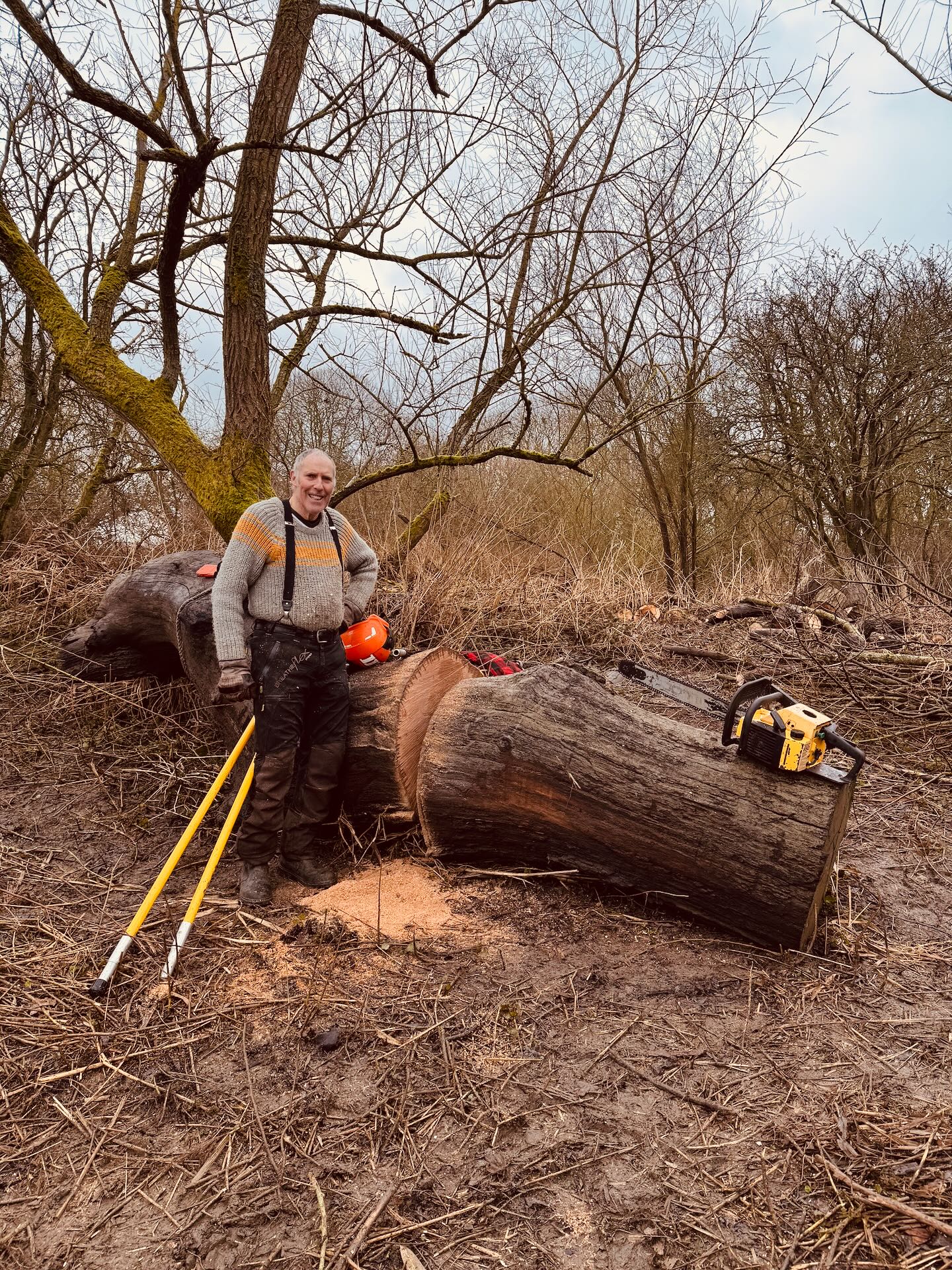
 Steve - Charcoal Maker
Land. Wood. Fire.
Sustainability is at the heart of Ouse Valley Charcoal.
Steve - Charcoal Maker
Local sourcing
Timber comes from local sources, including managed trees along the River Great Ouse and wood supplied by local arborists. Much of this wood would otherwise be chipped or wasted.
Keeping production and supply close to home means transport distances — and environmental impact — are kept to a minimum.
How we work
Wood from managed trees along the river and material that local arborists would otherwise chip away. Nothing is wasted.
Electric tools wherever possible, alongside cleaner fuels and biodegradable oils when machinery requires them.
A modern retort kiln burns the gases released during production, reducing smoke and improving efficiency compared with traditional pits and ring kilns.
Delivered within Harrold, Odell and Carlton. Short journeys, known customers, a supply chain you can see for yourself.
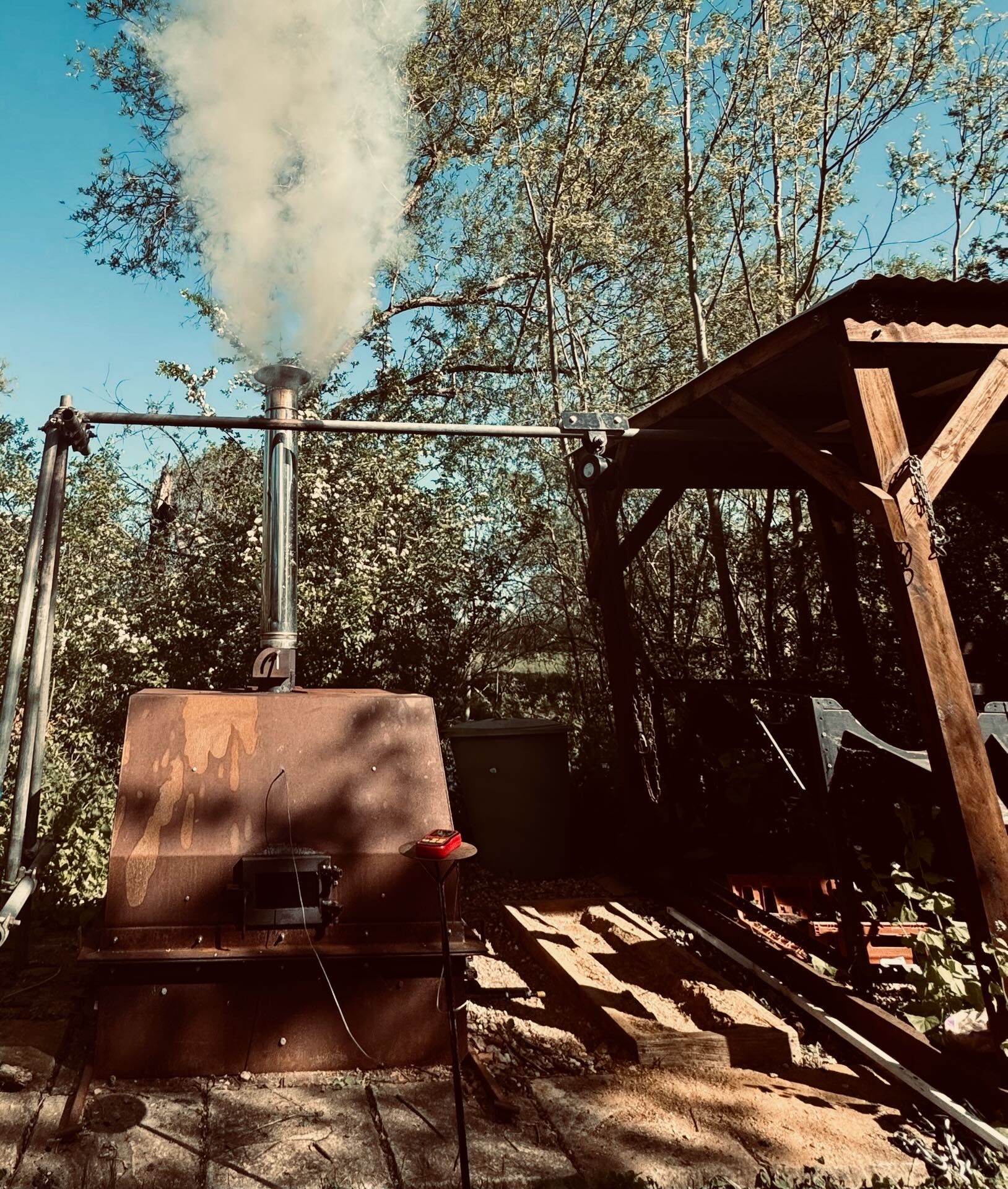
The retort difference
Traditional ring kilns release large volumes of unburned gases — the smoke you see billowing from a charcoal site. A retort captures those gases and burns them back into the process, providing heat for the next batch.
The result is cleaner production, better yields and a denser, more consistent charcoal. It's a more technical process than the old way, but it sits more lightly on the landscape around it.